

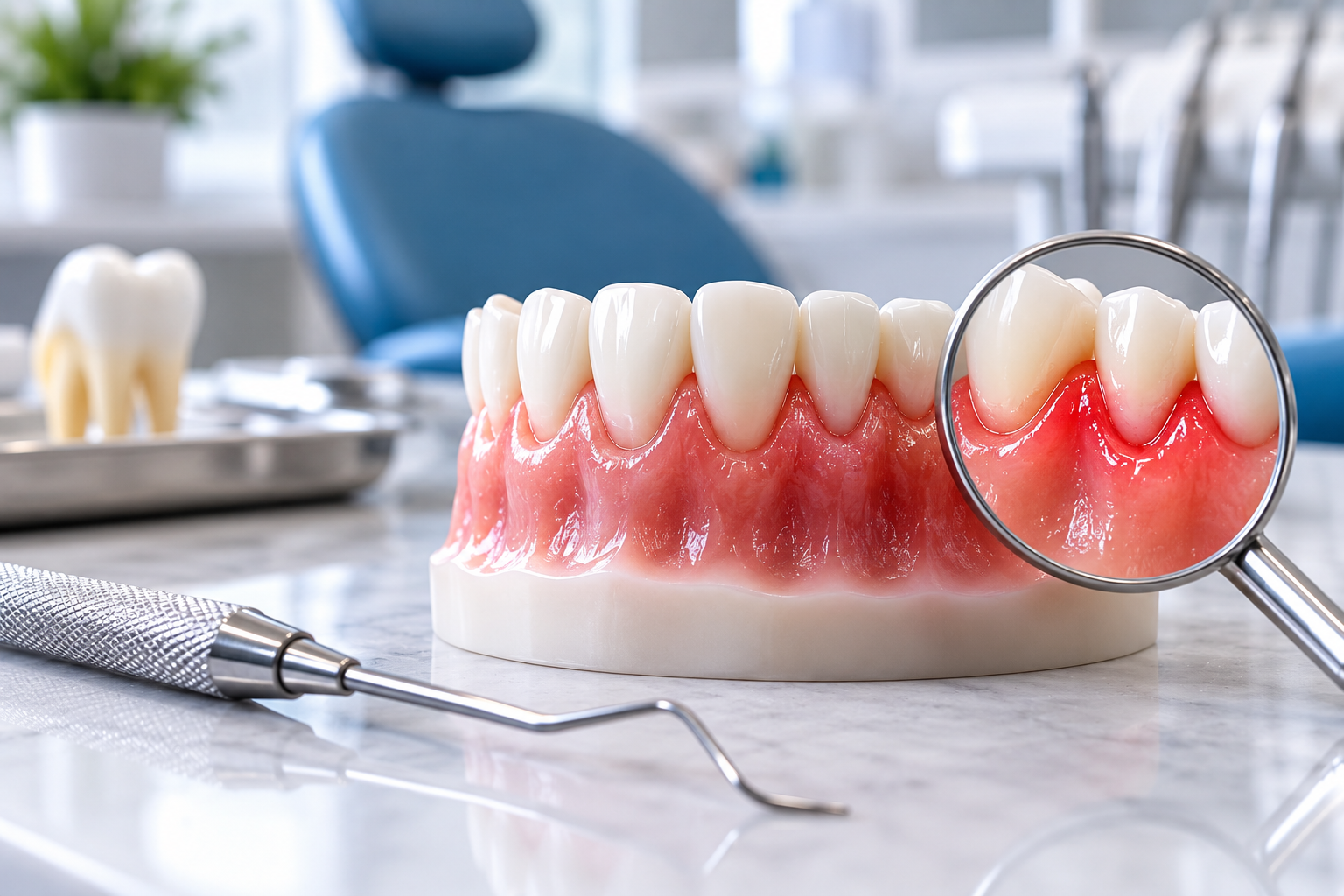
Gum problems can start with symptoms that are easy to overlook. You may notice a little blood when brushing, red or swollen gums, or tenderness while flossing. These signs can point to gingivitis, the early stage of gum disease.
Early treatment can help you manage gum disease more effectively. Learning what causes gum inflammation, recognizing the warning signs, and getting appropriate treatment can help protect your gums and support your overall oral health.
If you experience persistent bleeding or irritated gums, see a dentist for gum disease. A dental examination can help identify the cause and determine the most appropriate treatment.
What Is Gum Disease?
Gum disease affects the tissues that support your teeth. The condition can range from mild gingivitis to more advanced periodontal disease.
Gingivitis causes inflammation in the gums. Without proper care, the condition can progress and affect the deeper tissues around the teeth.
Early gum disease may not cause significant pain, so some people may not realize they have a problem. Regular dental examinations can help your dentist identify changes in your gums before the condition becomes more difficult to manage.
Common Signs of Gum Disease
Knowing the early warning signs can help you decide when to schedule a dental visit.
- Bleeding while brushing or flossing
- Red or swollen gums
- Tender or irritated gums
- Persistent bad breath
- Gums that appear to pull away from the teeth
- Changes in how your teeth fit together
- Loose teeth in more advanced cases
- Increased sensitivity around the gumline
Occasional bleeding may have several causes, but repeated or unexplained bleeding should not simply be ignored.
What Causes Gum Inflammation?
Plaque build up along the gumline commonly causes gum inflammation. Plaque is a sticky layer of bacteria that develops on your teeth throughout the day.
When you do not remove plaque properly, it can irritate your gums. Over time, plaque can harden into tartar, also called calculus. Tartar makes it harder to keep the area clean with regular brushing and flossing.
Other factors can also affect gum health. These factors include smoking or tobacco use, certain medical conditions, medications, hormonal changes, and inconsistent oral hygiene.
A dental examination can help your dentist determine what may contribute to your symptoms.
Is Bleeding While Brushing Normal?
Bleeding gums should not automatically be considered normal.
Gums can bleed when they are inflamed or irritated, particularly around areas where plaque has accumulated. Some people may also experience bleeding when they begin flossing more consistently after a period of not flossing regularly.
However, persistent bleeding is a reason to have your gums evaluated. Instead of stopping brushing or flossing because your gums bleed, speak with a dentist about the underlying cause and the appropriate way to care for your gums.
Gingivitis Treatment: What Can Help?
The appropriate gingivitis treatment depends on the condition of your gums and the amount of plaque or tartar present.
Treatment may include a professional dental cleaning to remove plaque and tartar that cannot be effectively removed with routine brushing alone. Your dentist or dental hygienist may also review brushing and flossing techniques and recommend changes to your daily oral hygiene routine.
For mild gingivitis, improving oral hygiene and receiving professional cleaning may help reduce inflammation. If gum disease has progressed beyond gingivitis, additional periodontal treatment may be necessary.
Gum Inflammation Treatment
Gum inflammation treatment starts with identifying what is causing the inflammation.
If plaque and tartar are contributing to the problem, professional cleaning can help remove these deposits. Your dentist may also recommend a more specific periodontal treatment depending on the condition of your gums.
The goal is to control the infection or inflammation, improve gum health, and prevent the condition from progressing.
Treatment is not necessarily the same for every patient. The depth of gum pockets, amount of inflammation, tartar buildup, and overall oral health can all influence the recommended approach.
Bleeding Gums Treatment
Bleeding gums treatment depends on why the gums are bleeding.
If gum inflammation caused by plaque is the main issue, improving daily oral hygiene and receiving professional dental care may help. If the bleeding is related to more advanced gum disease or another oral health problem, your dentist may recommend additional evaluation or treatment.
It is important not to rely only on products marketed for bleeding gums without finding the underlying cause. Persistent symptoms should be evaluated by a dental professional.
What Happens When You See a Dentist for Gum Disease?
A dentist for gum disease will typically begin by examining your teeth and gums. The dental team may look for redness, swelling, bleeding, tartar build up, gum recession, and other signs of periodontal problems.
Depending on what they find, they may measure the spaces around your teeth to evaluate the health of the supporting tissues. Dental X-rays may also be recommended when needed to check areas that cannot be evaluated from the surface alone.
Once the condition is assessed, the dentist can explain the recommended treatment and ways to maintain healthier gums at home.
Can Gum Disease Be Prevented?
Good daily oral care can reduce the risk of gum problems.
- Brush your teeth twice a day with fluoride toothpaste.
- Clean between your teeth regularly with floss or another recommended interdental cleaner.
- Have regular dental examinations and professional cleanings.
- Avoid tobacco products.
- Pay attention to changes in your gums.
- Tell your dentist about persistent bleeding, swelling, or sensitivity.
Your dental team can also show you areas where plaque tends to accumulate and help you improve your brushing and interdental cleaning technique.
When Should You See a Dentist?
Consider scheduling a dental appointment if you regularly notice blood when brushing or flossing, swollen or red gums, persistent bad breath, gum tenderness, or other changes around your teeth.
You should also seek dental care if your gums appear to be receding or if you notice loose or shifting teeth.
Early evaluation can help determine whether the problem is gingivitis or something that requires more advanced periodontal care.
Choosing a Dentist for Gum Disease
When looking for a dentist for gum disease, consider whether the dental office evaluates the health of your gums as part of routine care and provides treatment based on your individual condition. It can also be helpful to choose a dental team that explains what is causing your symptoms and gives you clear instructions for maintaining your gums between appointments.
Rather than treating bleeding or inflammation as an isolated symptom, a comprehensive evaluation can help identify the reason behind the problem and determine the next step.
Frequently Asked Questions
What is the best treatment for gingivitis?
Treatment depends on the cause and severity of the gum inflammation. Professional cleaning and improved daily oral hygiene are commonly part of care for gingivitis, while more advanced gum disease may require additional periodontal treatment.
Why do my gums bleed when I brush?
Bleeding can occur when gums are inflamed or irritated. Plaque build up is a common cause, but persistent bleeding can have other causes as well. A dental examination can help identify the reason.
Can gum inflammation go away?
Mild gum inflammation can improve when you treat the cause and maintain good oral hygiene. If the inflammation continues, see a dentist for an evaluation.
How can I treat bleeding gums?
The right bleeding gums treatment depends on the cause. Professional cleaning, improved oral hygiene, and treatment of underlying gum disease may be recommended depending on your dental examination.
When should I see a dentist for gum disease?
See a dentist if you have persistent bleeding, swollen or red gums, gum tenderness, bad breath that does not improve, gum recession, or loose teeth. Early evaluation can help determine the appropriate treatment.
Conclusion
Bleeding, swelling, redness, and irritation around the gums can be early signs of a gum health problem. Gingivitis is easier to manage when you treat it early. More advanced periodontal disease may require additional treatment..
If your gums regularly bleed or remain irritated, do not ignore the symptoms. A dentist for gum disease can examine your gums, identify possible causes, and recommend appropriate care.
Taking care of gum health through professional dental care and consistent daily oral hygiene can help protect the tissues that support your teeth for the long term.
 Location
 Appointment
 Phone
Phone